Best Nakshatra for Marriage: 8 Favourable Choices
What makes a nakshatra favourable for marriage if no single star can guarantee a happy relationship? In Vedic astrology, a nakshatra is one of the 27 lunar divisions used to understand temperament, emotional needs, and patterns of connection. Traditional marriage assessments consider qualities such as loyalty, communication, stability, affection, responsibility, and shared growth, not just a star's reputation.
A kundli is a birth chart calculated from the time and place of birth. A dasha is a planetary period that can influence the timing and expression of life events. A muhurta is an auspicious time selected for an important beginning, including a wedding ceremony.
This guide ranks eight favourable choices through a practical marriage lens. Each profile considers emotional strengths, everyday trade-offs, partner qualities, and habits that can support the relationship. The Moon's nakshatra matters, but it's only one part of compatibility. The complete picture may change after comparing both kundlis, reviewing dashas, considering padas, and selecting a suitable muhurta.
Table of Contents
- 1. Ashwini Nakshatra, the Healer and Pioneer
- 2. Rohini Nakshatra, the Fertile and Devoted Partner
- 3. Mrigashira Nakshatra, the Curious and Communicative Spouse
- 4. Pushya Nakshatra, the Nourisher and Stable Anchor
- 5. Hasta Nakshatra, the Skilled and Pragmatic Partner
- 6. Chitra Nakshatra, the Creative and Magnetic Beloved
- 7. Uttara Phalguni Nakshatra, the Magnanimous and Loyal Companion
- 8. Anuradha Nakshatra, the Devoted and Deepening Friend
- 8 Nakshatras Compared for Marriage
- Use the List as a Starting Point, Not a Verdict
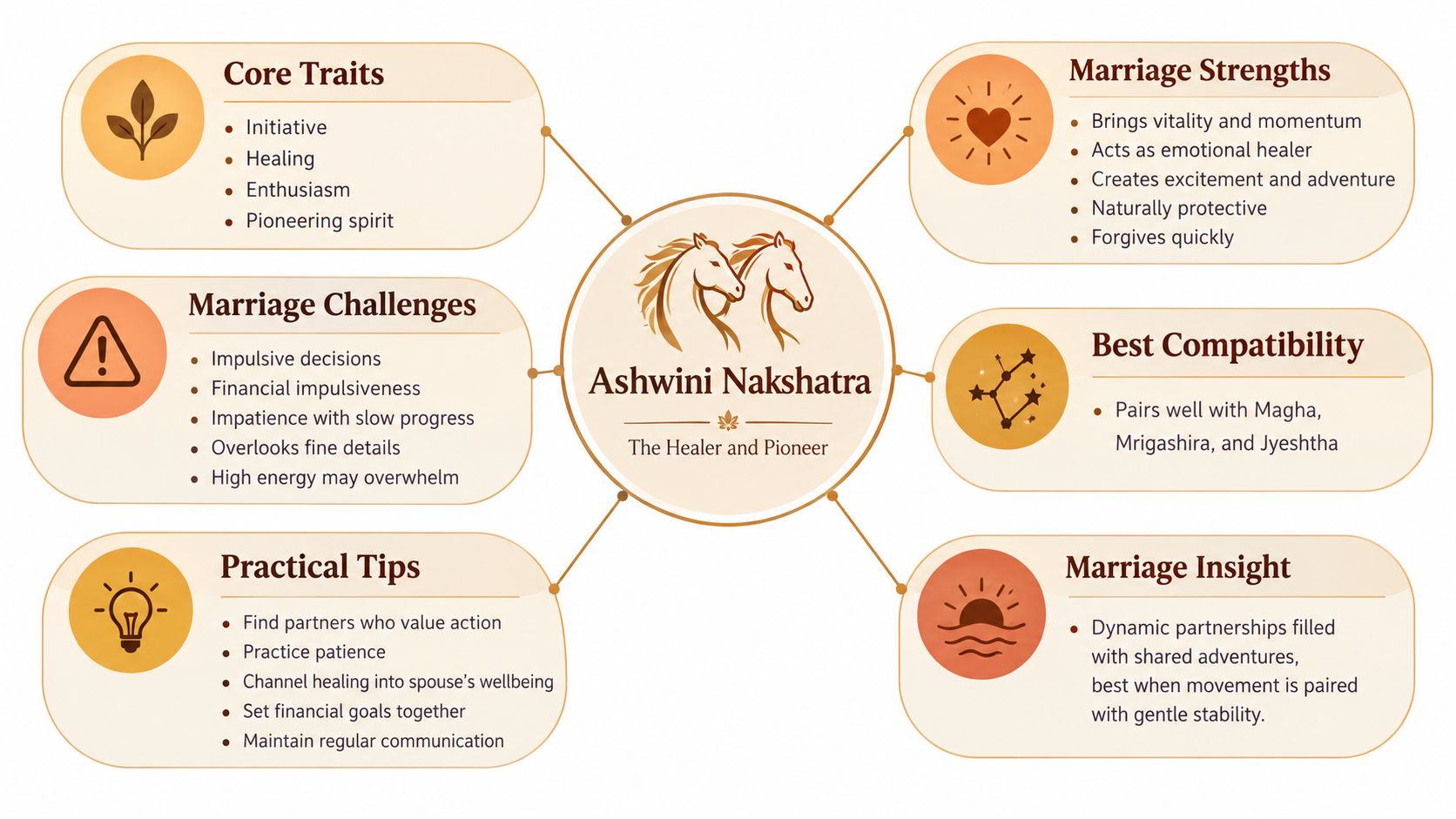
1. Ashwini Nakshatra, the Healer and Pioneer
Ashwini is the first nakshatra, ruled by Ketu and symbolised by a horse's head. Its energy is quick, direct, and eager to begin. Traditionally, Ashwini is associated with initiative, healing, movement, and the ability to respond when others need help.
In marriage, an Ashwini native may show affection through action. This partner might arrange medical care, solve a practical problem, organise a move, or encourage the relationship to take its next step. Such energy can bring momentum to a partnership that has been delayed by uncertainty. Ashwini also tends to appreciate partners who are open to growth rather than fixed in old routines.
The trade-off is pace. An Ashwini partner may decide quickly, expect quick replies, and become frustrated when a spouse needs more time. A caring instinct can also become over-management if help is offered before the other person has asked for it.
Habits that strengthen the pairing
- Choose action-oriented partners: A partner who values learning, movement, and constructive change can appreciate Ashwini's natural drive.
- Build patience deliberately: Important decisions should include time for the slower partner to think, especially around money, family, and relocation.
- Turn care into cooperation: Health support works best when it respects the spouse's choices rather than becoming a form of control.
- Set shared financial goals: A clear savings or household plan can direct impulsive energy toward a common future.
- Keep communication regular: Short, honest conversations can prevent a fast-moving partner from assuming that silence means agreement.
A couple with one Ashwini partner and one more cautious partner might work well when the difference becomes complementary. Ashwini can initiate the journey, while the other person checks practical details. Accurate guidance still depends on the full chart, and a detailed kundli reading can place Ashwini's Moon position alongside the seventh house, Venus, Mars, and relevant dashas.
2. Rohini Nakshatra, the Fertile and Devoted Partner
Rohini is ruled by Venus and represented by a chariot. It's often described as one of the most auspicious nakshatras for marriage because its symbolism supports affection, attraction, comfort, fertility, and devotion. A Rohini native may naturally focus on creating a pleasant home and a relationship that feels emotionally secure.
This partner often expresses love through warmth, loyalty, beauty, food, touch, and attention to domestic comfort. Rohini can bring a strong desire to build a stable and prosperous partnership rather than treat marriage as a temporary arrangement. In everyday life, that may appear as careful home-making, thoughtful celebrations, or a preference for shared routines.
The same preference for security can become possessiveness. A Rohini partner may find sudden changes difficult or may confuse closeness with constant access. Comfort can also become a reason to avoid necessary conversations, new responsibilities, or unfamiliar environments.
Keeping warmth healthy
Rohini's gift for harmony becomes most useful when both partners can discuss conflict gently instead of postponing it. A spouse who appreciates beauty and stability may feel especially comfortable with Rohini, while an independent or highly change-oriented partner may need more space.
- Include both partners in home decisions: Decor, spending, and household routines should reflect shared preferences.
- Balance comfort with adaptation: New duties, family changes, and career decisions require flexibility.
- Deepen emotional intimacy: Sensuality can support trust when it's joined with vulnerable conversation.
- Protect independence: Separate interests and friendships help affection remain generous rather than restrictive.
- Use calm conflict repair: A soft tone is valuable, but the underlying issue still needs a clear resolution.
Rohini may be called the best nakshatra for marriage in general lists, but that label doesn't override Nadi, Gana, Yoni, the seventh house, or the timing shown by both charts. It describes a favourable starting quality, not a verdict about two individuals.
3. Mrigashira Nakshatra, the Curious and Communicative Spouse
What keeps a marriage with Mrigashira lively, and what helps its curiosity feel secure rather than unsettled?
Mrigashira is symbolised by a deer's head, suggesting a gentle mind that keeps searching for understanding. Traditional interpretations connect it with intelligence, exploration, playfulness, and sensitivity to new ideas. In married life, these qualities can make conversation feel like an open window. A Mrigashira partner may enjoy books, travel plans, creative hobbies, and discovering unfamiliar viewpoints.
The strongest pairing is often with someone who welcomes questions without treating them as criticism. A flexible, communicative spouse can enjoy Mrigashira's changing interests, while a more settled partner may provide the rhythm that turns ideas into shared routines. The trade-off is clear: too much predictability can feel confining, yet too much change can make everyday responsibilities harder to maintain.
Restlessness usually appears through unfinished conversations or shifting concerns. Mrigashira may hope a spouse will notice implied feelings, while its own changing signals create confusion. Direct language acts like a clear map. It shows both partners where the conversation is going.
Making curiosity work in daily life
A couple can protect both novelty and reliability by giving each a place. One evening might be reserved for a creative activity, while another is kept for household planning. Separate interests also matter. Curiosity remains healthy when each partner has room to explore independently.
- Name concerns early: Small doubts are easier to address before they become suspicion.
- Make requests direct: Clear emotional expectations reduce guessing and resentment.
- Plan manageable variety: New recipes, short trips, courses, or joint projects can refresh the relationship.
- Track practical promises: A shared calendar helps ideas coexist with commitments.
- Repair unfinished conversations: Set a time to return to difficult topics instead of leaving them unresolved.
Mrigashira may suit partners who value conversation and flexibility, but a nakshatra preference is only a starting point. Moon placement, Mercury, Venus, the seventh house, kundli matching, dashas, and muhurta can change the interpretation. Guidance from verified astrologers can place this nakshatra within the complete birth charts.
4. Pushya Nakshatra, the Nourisher and Stable Anchor
A Pushya partner often asks a practical marriage question: how can our home remain safe, supportive, and steady? Ruled by Saturn and symbolised by a cow's udder or an archer's bow, Pushya is traditionally linked with nourishment, responsibility, protection, growth, and discipline. Its care often appears through consistency rather than grand declarations.
This can make Pushya a reassuring choice for someone who values dependable support. The native may remember appointments, help relatives, organise household duties, and consider long-term security before making major decisions. During stressful periods, that steady presence can help a couple feel anchored.
The same strength has a trade-off. A Pushya partner may accept too many duties, keep quiet about the pressure, and later feel unseen when the spouse does not recognise the sacrifice. Fixed routines can also crowd out romance, play, or the other partner's preferred methods.

A stable home needs emotional room as well as practical order. Partners can agree on household routines, family responsibilities, and financial priorities, while protecting time that belongs to the relationship rather than work or relatives.
Practical rule: Reliable care still needs appreciation, rest, affection, and shared decision-making.
Try these habits:
- Divide responsibility openly: Discuss planning and invisible tasks before one partner becomes the default manager.
- Ask for help early: Naming pressure gives the spouse a fair chance to respond.
- Keep affection visible: Small expressions of warmth prevent duty from replacing closeness.
- Make room for difference: A different way of completing a task is not automatically carelessness.
- Protect unplanned time: Flexibility keeps a well-organised household from feeling rigid.
Pushya may suit partners seeking a settled family life and dependable emotional support. It remains a preference, not a verdict. The seventh house, planetary strength, Moon and Venus influences, kundli matching, dashas, and muhurta can all change the interpretation. A complete reading should consider both individual birth charts.
5. Hasta Nakshatra, the Skilled and Pragmatic Partner
What makes a capable partner feel emotionally close, not merely helpful? Hasta is represented by an open hand and associated with skill, dexterity, organisation, and practical ability. A Hasta native often expresses affection through action, such as repairing something, managing a schedule, preparing a thoughtful meal, or arranging documents so daily life runs more easily.
This can give marriage a dependable foundation. Hasta often responds to difficulty by looking for a workable solution, which may suit a spouse who values clear routines, reliability, and shared responsibility. The relationship can function like a well-kept home: useful systems create comfort, provided the people living in it still feel heard.
Practical care does not automatically communicate hurt, gratitude, or a need for reassurance. A partner may complete every task and still leave feelings unspoken. Hasta can also become impatient when a spouse is more spontaneous, untidy, or inefficient.
The hand must also listen
The strongest Hasta pairings connect competence with curiosity about the other person's inner world. Before fixing a problem, ask whether the spouse wants advice, comfort, or just attentive listening.
- Say the feeling plainly: “I felt hurt” or “I appreciated that” gives practical care an emotional voice.
- Ask before arranging: Confirm the need instead of deciding what the spouse should want.
- Allow different systems: A partner's less orderly method may reflect a different rhythm, not a lack of care.
- Schedule enjoyment: Protect time for rest, dates, and shared hobbies rather than filling every gap with tasks.
- Make affection visible: A note, a spontaneous outing, or warm words can balance service-based love.
Hasta may pair well with someone creative and less organised. Its structure can steady the household, while the other partner brings flexibility and expression. This works when routines support both people, rather than becoming a measure used to judge one person.
Nakshatra preference is only a starting point. The seventh house, planetary strength, Moon and Venus influences, kundli matching, dashas, and muhurta can change the interpretation. Individual birth charts should be considered before treating Hasta as a marriage verdict.
6. Chitra Nakshatra, the Creative and Magnetic Beloved
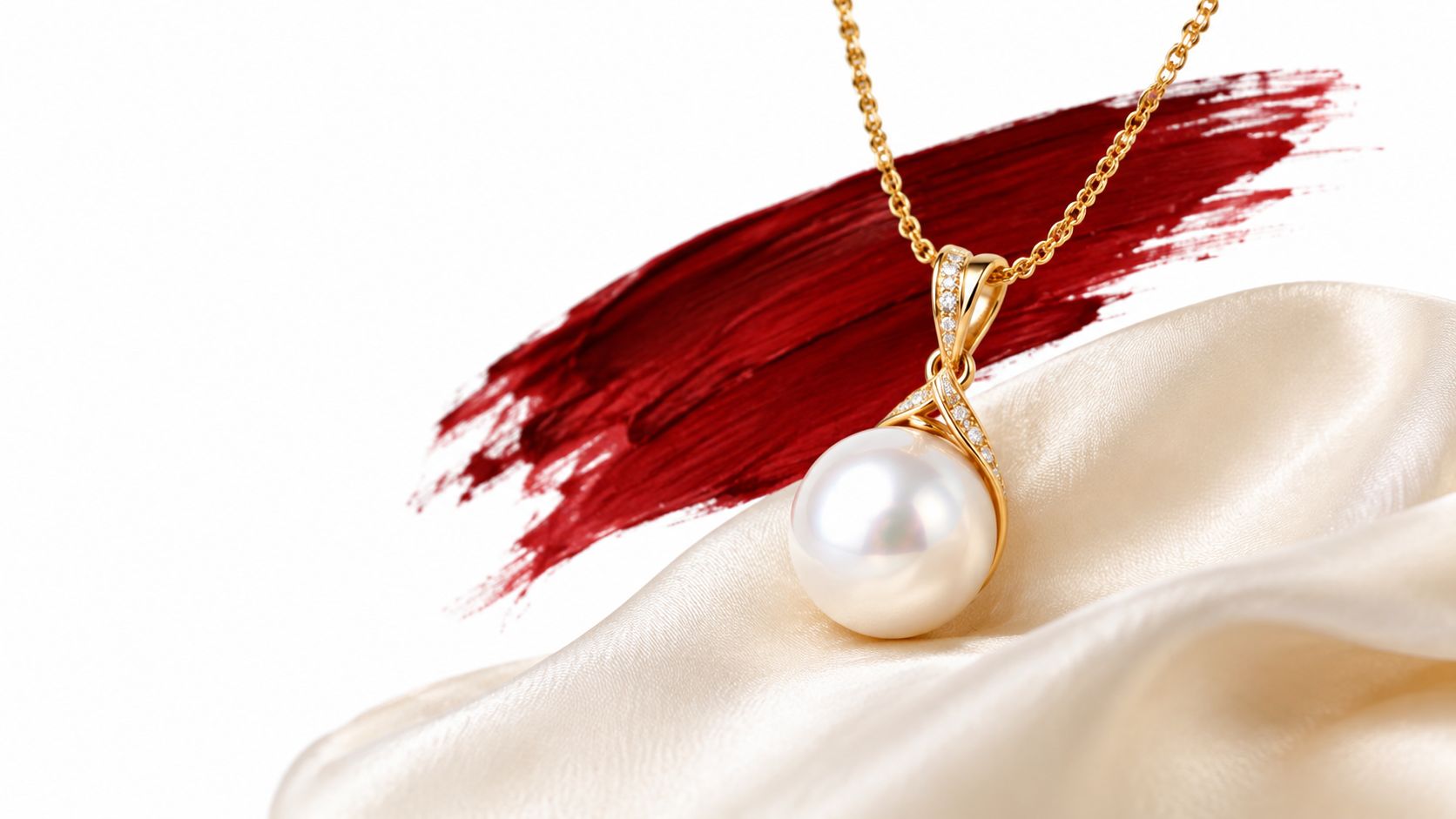
Can a marriage feel both beautiful and grounded? Chitra, ruled by Mars and symbolised by a pearl or bright jewel, brings creativity, beauty, magnetism, ambition, and passionate self-expression to that question. A Chitra native may add colour to married life through art, design, career goals, travel, or an active social circle.
This partner often wants love to feel alive rather than purely routine. Chitra may encourage a spouse to pursue a dream, refresh the home, try unfamiliar experiences, or aim higher professionally. Shared admiration can strengthen attraction and turn ambition into a joint project.
The same intensity can create friction. High standards may sound like criticism, while pride can make a disagreement grow quickly. A spouse who values independence may resist Chitra's urge to refine the relationship, the home, or the other person's choices. The practical match is someone who appreciates passion without treating marriage as a contest for control.
A useful habit is to give conflict a clear container. The couple can pause before voices rise, choose a time to resume the conversation, and address one concern instead of collecting old grievances. Creative work, travel plans, or shared goals can also direct Mars energy toward cooperation.
- Use requests, not character judgments: Describe the change you want clearly.
- Protect individual space: Close partnership still allows separate interests.
- Admit mistakes early: Humility protects dignity on both sides.
- Define success together: Shared goals make ambition less competitive.
Chitra may suit a partner who welcomes energy, beauty, and growth. Yet individual birth charts, kundli matching, planetary strength, Moon and Venus influences, dashas, and muhurta can change the picture. Mars may support courage and creativity, or express itself through conflict, so nakshatra preference remains a starting point rather than a marriage verdict.
7. Uttara Phalguni Nakshatra, the Magnanimous and Loyal Companion
Uttara Phalguni is ruled by the Sun and symbolised by a bed or hammock, images of rest, support, generosity, duty, and committed partnership. In a practical marriage ranking, it stands out for dependable loyalty and a strong sense of honour.
An Uttara Phalguni native may treat promises as responsibilities. They often want to create a dignified home, support a spouse's ambitions, and remain reliable through changing circumstances. Their generosity and willingness to forgive can help a relationship recover after everyday disagreements. A partner who values commitment, cooperation, and family responsibility may feel naturally comfortable with this temperament.
The trade-off appears when duty becomes control. High standards can feel like criticism, and natural leadership may sound like instruction when decisions are made alone. Generosity can also turn into over-giving, followed by quiet resentment when the effort goes unrecognised. A compatible spouse is someone who respects Uttara Phalguni's reliability while also speaking up and sharing authority.
For this pairing to work, build equality into ordinary routines:
- Discuss decisions before acting: Shared plans prevent leadership from becoming command.
- Set limits on giving: Generosity should not depend on exhaustion or silent sacrifice.
- Name feelings early: Honest vulnerability makes support possible before disappointment hardens.
- Acknowledge effort: Regular appreciation keeps responsibility from feeling invisible.
- Keep standards humane: Guidance is easier to accept when it leaves room for different habits.
Uttara Phalguni may suit a partner who wants a steady companion and is willing to maintain mutual respect. Still, nakshatra preference is only an opening comparison. Individual birth charts, planetary strength, the seventh house, Moon and Venus influences, dashas, and muhurta can change the interpretation. A detailed kundli matching assessment can examine these factors alongside Gana, Nadi, and Yoni before the couple draws conclusions.
8. Anuradha Nakshatra, the Devoted and Deepening Friend
Could friendship be the strongest foundation for an Anuradha marriage? Ruled by Saturn and symbolised by a gateway, Anuradha is linked with devotion, discipline, privacy, and emotional depth. Its relationship strength often develops through shared work and trust rather than attraction or social approval alone.
Anuradha may take time to reveal vulnerability. The native can watch, listen, and assess a partner before speaking openly, especially after disappointment. With a patient spouse, this careful approach can become loyalty and emotional endurance. A partner who values meaningful conversation, personal growth, and sincerity may feel comfortable here.
The trade-off is distance. Private reflection can become withdrawal, and a strong need for loyalty can turn into suspicion when expectations remain unspoken. Anuradha therefore suits a partner who respects quiet time while still asking clear, kind questions.
A bond that deepens through shared work and trust needs practical habits:
- Begin with small disclosures: Short, regular conversations about fears and hopes make openness less overwhelming.
- Create shared practices: Study, spiritual practice, service, or therapy can give the relationship a constructive focus.
- Keep outside connections: Friendship within marriage grows healthier when both partners remain connected to community and trusted friends.
- Discuss suspicion directly: Ask for clarification before private worry becomes a fixed conclusion.
- Review difficult periods together: Treat strain as a reason to adjust habits, not assign blame.
- Value sincerity over appearance: Shared meaning matters more than maintaining an impressive image.
Anuradha suits couples who want friendship at the centre of marriage. In charts where Saturn is strong and unafflicted, its influence can show steadiness. A weak or afflicted Saturn can appear as emotional withdrawal, which the couple should discuss directly. The Moon's pada, planetary aspects, dasha sequence, each individual birth chart, and muhurta can change the interpretation. A detailed kundli matching assessment should examine these factors before a nakshatra preference becomes a conclusion.
8 Nakshatras Compared for Marriage
| Nakshatra | Adjustment Complexity | Resource Requirements | Expected Outcomes | Ideal Use Cases | Key Advantages |
|---|---|---|---|---|---|
| Ashwini – The Healer and Pioneer | Low–Moderate: fast pace needs partner adaptability | Active engagement, patience, joint financial planning, shared activity | Dynamic, adventurous marriage; quick recovery from conflicts; healing support | Partners valuing initiative, action, and growth; those who can provide grounding | Vitality, initiative, healing instincts, forward momentum |
| Rohini – The Fertile and Devoted Partner | Low: naturally harmonious but resists rapid change | Stability, material comfort, appreciation of beauty, emotional reassurance | Stable, prosperous, romantic home with long-term devotion | Couples seeking security, domestic harmony, and sensual connection | Loyalty, sensuality, aesthetic sense, capacity to attract prosperity |
| Mrigashira – The Curious and Communicative Spouse | Moderate: needs ongoing novelty and intellectual engagement | Regular intellectual stimulation, open communication, variety | Stimulating, communicative partnership; lively dialogue and exploration | Partners who prioritize conversation, learning, and flexibility | Excellent communication, adaptability, curiosity, playful problem-solving |
| Pushya – The Nourisher and Stable Anchor | Low–Moderate: steady but may resist sudden shifts | Consistent responsibility sharing, time for family, long-term planning | Secure, reliable marriage with strong foundations and provision | Couples focused on family stability, tradition, and long-term security | Reliability, nurturance, discipline, long-term planning |
| Hasta – The Skilled and Pragmatic Partner | Moderate: practical strengths may need emotional balancing | Organization, clear roles, practical support, structured routines | Well-managed household and finances; dependable daily care | Partners who value competence, efficiency, and practical expressions of love | Organizational skill, problem-solving, clear communication, reliability |
| Chitra – The Creative and Magnetic Beloved | Moderate–High: passionate intensity requires conflict management | Creative collaboration, respect for independence, outlets for ambition | Passionate, aesthetically rich partnership; potential for intense conflicts if unmanaged | Couples drawn to creativity, ambition, and dynamic self-expression | Creativity, charm, ambition, magnetic presence |
| Uttara Phalguni – The Magnanimous and Loyal Companion | Low: steady and noble but may hold high standards | Mutual respect, shared values, boundaries that protect dignity | Dignified, loyal partnership with strong commitment and forgiveness | Partners who value honor, leadership, and sincere devotion | Generosity, loyalty, leadership, integrity |
| Anuradha – The Devoted and Transformative Friend | Moderate: depth requires patience and emotional maturity | Time for emotional growth, shared spiritual or developmental pursuits | Deep, transformative bond that fosters mutual personal growth | Couples seeking spiritual depth, emotional transformation, long-term commitment | Devotion, depth, transformative support, steadfast loyalty |
Use the List as a Starting Point, Not a Verdict
The phrase best nakshatra for marriage suggests a single answer, but marriage compatibility is more personal than a ranking. Ashwini brings momentum and initiative. Rohini offers warmth, devotion, and a desire for comfort. Mrigashira contributes curiosity and communication. Pushya provides reliability and family-minded care. Hasta shows love through practical action, Chitra adds passion and creativity, Uttara Phalguni brings loyalty and honour, and Anuradha seeks depth and lasting friendship.
These strengths also reveal the trade-offs. Ashwini needs patience, Rohini needs healthy independence, Mrigashira needs clear emotional language, and Pushya needs shared responsibility. Hasta must express feelings as well as complete tasks, Chitra benefits from calmer conflict habits, Uttara Phalguni needs collaborative leadership, and Anuradha should balance introspection with openness.
A favourable nakshatra can describe useful relationship tendencies, but it doesn't guarantee a particular outcome. Conflicting lists exist because some sources discuss the birth nakshatra, while others discuss the Moon's nakshatra on the wedding day. Those are related questions, but they aren't identical. A star that looks favourable for a ceremony may not resolve emotional differences shown in the partners' birth charts.
A practical review before deciding
- Compare both kundlis: Review the seventh house, its lord, Venus, Jupiter, Moon, Mars, and relevant aspects instead of relying on one star name.
- Study emotional patterns: Notice how each person handles closeness, silence, conflict, family pressure, money, and personal space.
- Review dasha periods: Planetary periods can change how relationship themes are experienced and when major decisions feel easier or more demanding.
- Check matching factors: Ashtakoota matching uses eight factors and totals 36 points. Common practical reference points are 18 or more for compatibility, 24 or more for a good match, and 32 or more for an excellent match, as outlined in this kundli matching explanation. These thresholds are reference tools, not substitutes for chart interpretation.
- Examine padas: Each nakshatra has four padas, and each pada spans exactly 3°20' of the zodiac. This is why the exact Moon position and birth time can matter, as explained in this guide to nakshatra padas.
- Choose the wedding muhurta separately: The ceremony's timing should be assessed through tithi, nakshatra, yoga, karana, vara, Lagna, transits, and both birth charts, not only through a favourable star name. The wider wedding muhurta calculation process explains why these factors are considered together.
The Moon's nakshatra can help a couple discuss emotional needs in plain language. It can suggest whether a person may prefer speed, comfort, conversation, responsibility, practical care, passion, loyalty, or depth. It cannot replace mutual respect, honest communication, informed consent, financial transparency, or the daily habits that make a marriage safe and workable.
Families in India continue to use kundli matching in marriage decisions, including arranged and family-supported matches. One India-focused consumer source cited in the discussion of horoscope matching in arranged marriage reports that 84% of Indian marriages are arranged or family-supported, while over 70% of Hindu families consult an astrologer before finalising an arranged match. The same source reports that about 60% of urban, educated millennials report family use of kundli matching. These figures describe cultural participation, not proof that a nakshatra predicts marital success.
A qualified astrologer can help partners and families ask better questions. Kismo offers personalised marriage-compatibility and timing readings by chat or call, where an astrologer can review the complete chart rather than treating a nakshatra ranking as a final answer.
Kismo connects users with verified Indian astrologers for one-to-one guidance by chat or call, including kundli matching, birth-chart interpretation, and wedding muhurta discussions. Readers can bring both birth details and specific relationship questions to a session by visiting Kismo.