Ma Bagalamukhi Mantra Chanting Guide
A difficult conversation has become a daily source of anxiety. Perhaps a colleague keeps making hostile remarks, a legal dispute is draining attention, or repeated arguments leave a person speaking too quickly and regretting it later. In such moments, searches for the ma Bagalamukhi mantra often promise enemy destruction and instant victory.
That framing is too narrow. Maa Bagalamukhi's practice is better approached as a disciplined path for stillness, speech control, mental clarity, and protection during conflict. It can support a devotional routine, but it shouldn't replace legal advice, medical care, communication skills, or sensible action.
Table of Contents
- Understanding the True Purpose of the Practice
- Historical Context and Traditional Boundaries
- Structuring Your Daily Chanting Routine
- Identifying the Right Use Case for Your Needs
- When to Seek Personalised Astrological Guidance
- Maintaining Realistic Expectations and Inner Discipline
Understanding the True Purpose of the Practice
The central idea behind Bagalamukhi practice is stambhana, commonly understood as immobilisation, restraint, or silencing. In practical spiritual terms, that points toward stopping harmful momentum. The momentum may come from hostile speech, escalating arguments, scattered thinking, or fear that keeps a person reacting without judgement.
This doesn't make the mantra a universal tool for defeating enemies. A practitioner who begins with revenge may intensify anger and suspicion. A more constructive intention is protection of truth, restraint of harmful speech, and steadiness under pressure.
Three useful intentions
The practice fits most naturally when the need is specific:
- Protection: A person feels exposed to hostility, false accusations, or an unstable environment and wants a steadier inner boundary.
- Speech control: A person wants to pause before responding, reduce impulsive words, and communicate with greater precision.
- Dispute resolution: A person faces a serious disagreement and wants clarity, composure, and disciplined action rather than emotional escalation.
The mantra's traditional association with speech, tongue, and intellect control makes this inward reading especially important. The first person whose speech needs restraint is often the practitioner. That shift changes the practice from an attempt to control another person into a method for controlling reaction, attention, and language.
Practical rule: A sound intention seeks protection and truth, not humiliation or injury for an innocent person.
A realistic expectation matters. Textual and devotional traditions describe broad protective benefits, but they don't establish a controlled success rate, fixed duration, or guaranteed external result. The strongest reasonable outcome to seek is a more stable mind that can recognise facts, speak carefully, and take appropriate practical steps.
Historical Context and Traditional Boundaries
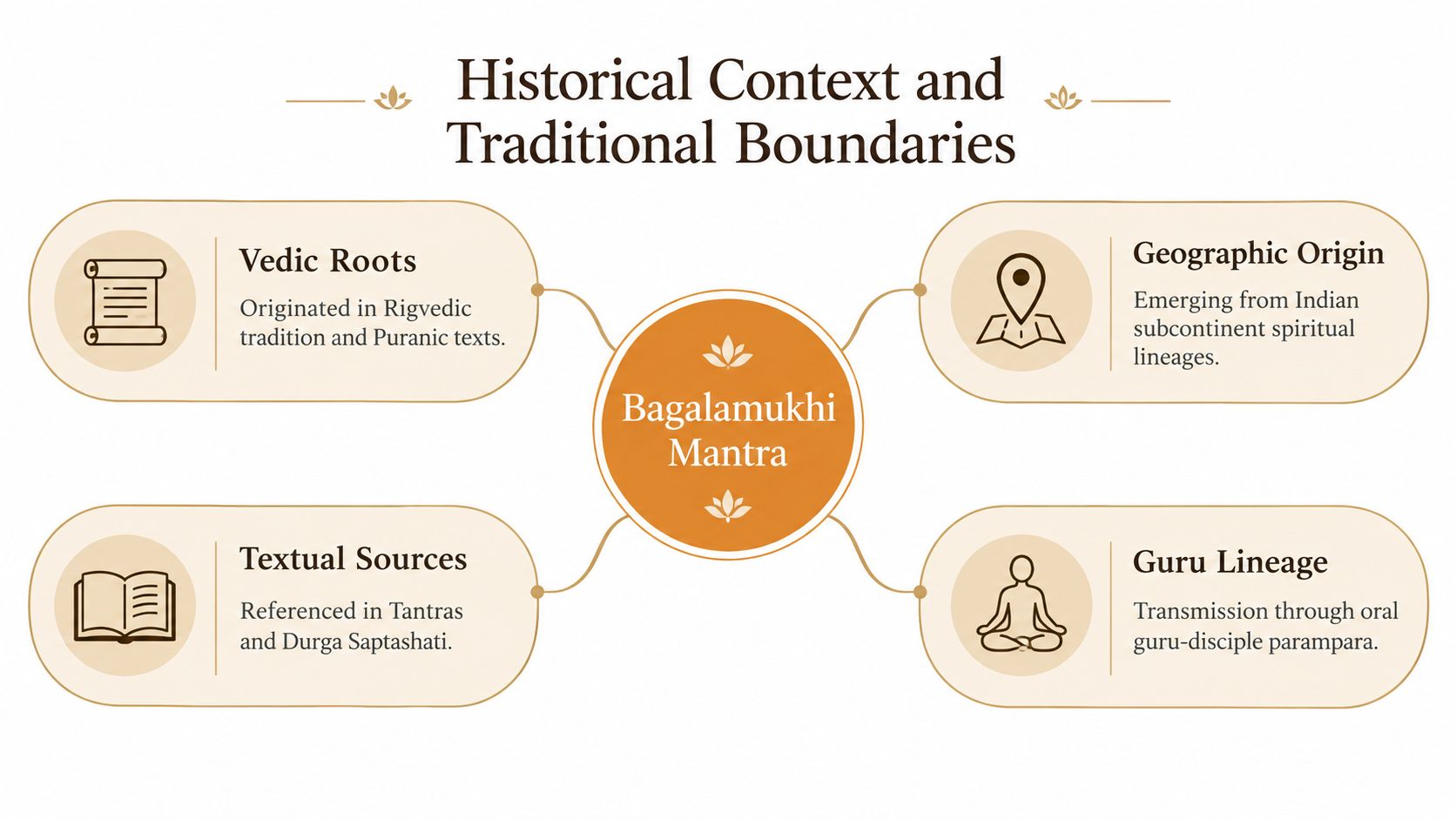
Maa Bagalamukhi occupies a defined place within Shakta Tantra, the stream of Hindu practice centred on the Divine Mother. She is identified as the 8th of the 10 Mahavidyas, a placement that gives her worship a specific role within the Mahavidya framework rather than treating the mantra as a general prosperity chant. Devotional sources also describe her principal root mantra as a structured formula of about 36 syllables, which reflects a fixed liturgical form rather than an improvised repetition. The traditional account of the Bagalamukhi mantra provides this placement and description.
The best-known Indian worship tradition is associated with the Himachal Pradesh temple connected with Haridra Sarovar. Local narratives place the goddess's origin in the Satya Yuga. For much of recorded temple history, the shrine was described as the only Bagalamukhi Devi temple in India, before a second major South Indian temple was established in Tamil Nadu. These traditions matter because they show that the practice has been preserved through particular ritual communities and sacred places, not only through modern internet summaries.
Why mantra variants require care
Published forms of the mantra don't always match. Some versions use hleem, while others use hreem. Some include phat, while others omit it. These differences aren't a reason for casual experimentation during a session.
A practitioner should learn one form from a reliable teacher, lineage, or carefully selected traditional source, then keep that form unchanged. Switching seed sounds halfway through a practice can create confusion about pronunciation, intention, and liturgical identity. The goal isn't to collect versions. The goal is to establish a consistent devotional discipline.
The mantra's historical boundary also clarifies what it isn't. It shouldn't be presented as a generic money chant, a substitute for treatment, or a guaranteed mechanism for winning every dispute. Its traditional emphasis is stambhana, particularly the restraint of harmful speech, hostile momentum, and destabilising influence.
Structuring Your Daily Chanting Routine
A sustainable routine starts with clarity rather than intensity. Householders, students, and professionals don't need to imitate an advanced ritual schedule to begin a respectful devotional practice. They need a clean setting, a stable intention, a consistent mantra form, and enough quiet to pay attention.
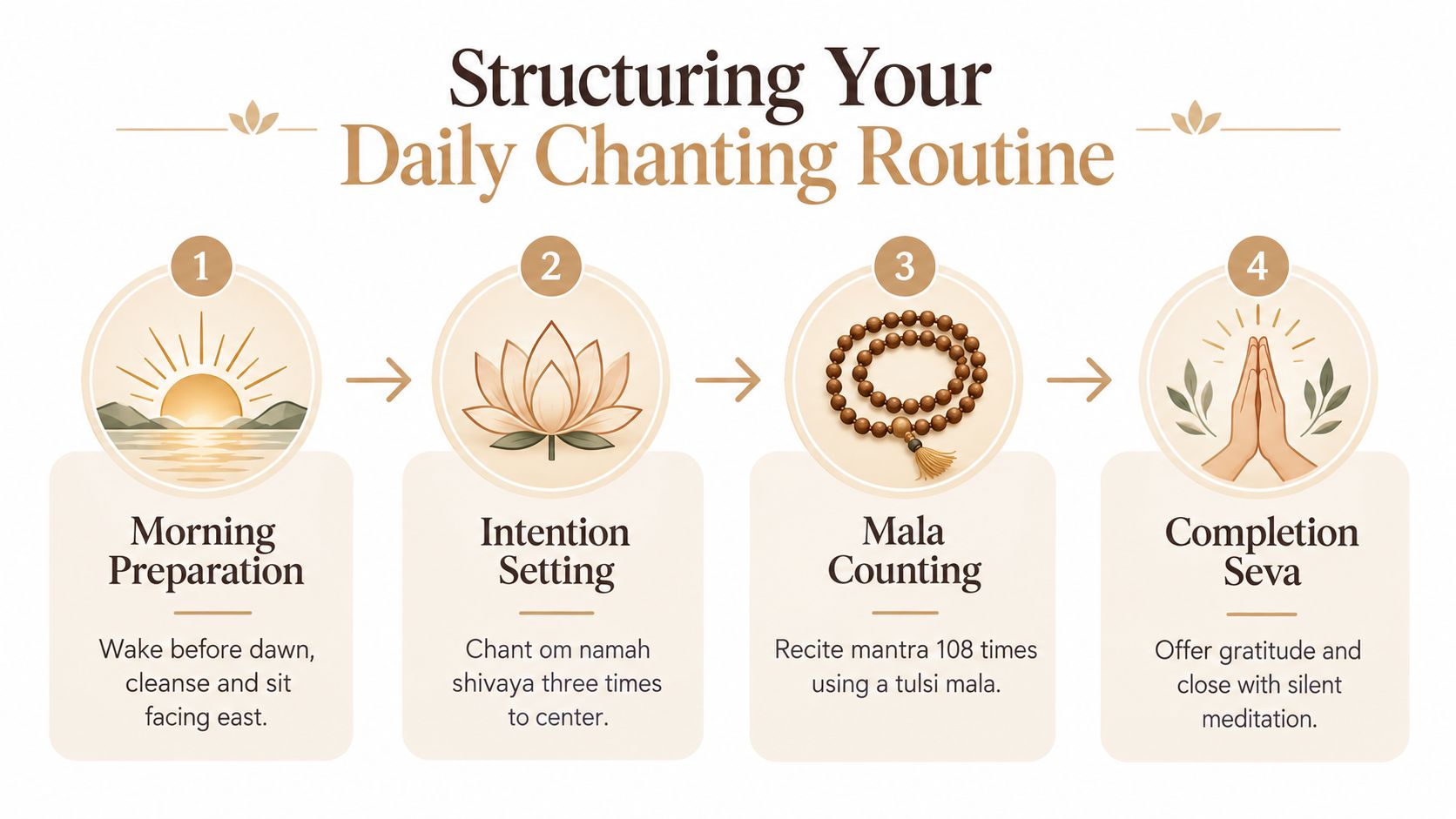
The technically grounded sequence is a staged japa-anushthana, or organised mantra practice. It moves from audible sound to softer recitation and finally to mental repetition.
A practical sequence
Set the vow. Before sitting, the practitioner states a clear intention in simple language. “May speech become truthful and restrained during this dispute” is more constructive than a vague wish for an opponent's downfall.
Prepare the body and space. Clean clothing, a reasonably quiet seat, and a brief period of settling are sufficient for a modern household practice. Physical purification supports attention, but it shouldn't become an excuse for postponing practice indefinitely.
Begin aloud. Audible chanting helps establish pronunciation and rhythm. The voice gives the mind a clear object and makes it easier to notice whether syllables are being rushed or altered.
Move to a soft voice. After the sound becomes steady, the practitioner can reduce the volume to a whisper. This stage turns attention inward without forcing immediate mental repetition.
Continue mentally. Silent repetition develops concentration. If the mind wanders, the practitioner returns to the next syllable without irritation and resumes the established rhythm.
Close. A short period of stillness allows the practice to settle. The practitioner can then record a practical action for the day, such as sending a measured reply, consulting a solicitor, or postponing a heated conversation.
The mantra form must remain consistent across the entire run. Published versions differ in their bīja seed sounds, with examples including hleem, hreem, and forms that include phat. One authorised form should be selected before practice begins, with no mid-session substitution. The textual discussion of Bagalamukhi practice supports this staged approach and also makes clear that available evidence is primarily textual rather than experimental.
Pronunciation discipline matters more than dramatic presentation. A modest, attentive routine is preferable to an elaborate practice performed inconsistently.
A fixed time can help, but a missed session shouldn't produce fear or guilt. The purpose is continuity of attention, not punishment. For readers also tracking planetary movements, a Vedic astrology guide to current planet transits can provide broader timing context, but transit information shouldn't be treated as a guarantee that chanting will produce a particular event.
The embedded material below can serve as a visual introduction to the routine:
A practitioner seeking a deeper visual explanation can view the following resource, while still checking its ritual claims against a trusted teacher or lineage:
Identifying the Right Use Case for Your Needs
The ma Bagalamukhi mantra should be matched to the actual problem. It's traditionally described as a protective or adversarial-stoppage sadhana, not a universal remedy for wealth, health, examination results, or every form of bad luck. The practitioner's inner discipline remains as important as the outer recitation.
| Life Challenge | Appropriate Remedy Focus | Expected Outcome |
|---|---|---|
| Hostile speech or false accusations | Protection, restraint, and truthful communication | Greater composure and a clearer response |
| Impulsive or damaging speech | Self-discipline and mental stillness | More careful words and reduced reactivity |
| A serious personal or professional dispute | Prayer alongside documentation, advice, and lawful action | Better judgement and steadier conduct |
| General financial ambition | A prosperity-oriented devotional or practical financial plan | Focus on budgeting, work, and suitable spiritual support |
| Physical illness or emotional crisis | Qualified medical or mental health care | Proper assessment and treatment, with prayer as personal support |
This distinction prevents a common error: interpreting every traditional benefit claim as a promise. Devotional sources describe protection and stability in broad terms, but they don't provide controlled success rates, fixed timelines, or dose-response evidence. A person shouldn't stop treatment, ignore a legal deadline, or confront a dangerous individual because a mantra has been started.
A simple decision test
The practice is a reasonable fit when the main need concerns protection, speech, or stability during conflict. It is a poor fit when the primary desire is guaranteed money, revenge, or a cure for disease.
The same test helps determine whether another Devi practice or a Navagraha remedy, a practice connected with the nine planetary influences, may be more appropriate. A person dealing mainly with career timing, marriage concerns, or recurring planetary periods needs chart-based context rather than a generic enemy-focused remedy. A detailed kundli reading for individual birth-chart context can help distinguish a situational concern from a longer pattern.
The most responsible interpretation is modest but useful: the mantra may support protection and stability, while real-world resolution still depends on evidence, communication, professional advice, and ethical conduct.
When to Seek Personalised Astrological Guidance
Generic spiritual advice has a limit. A birth chart may show a person's dasha, a planetary period used in Vedic astrology, recurring themes, and timing patterns that aren't visible from the problem alone. A kundli is the individual birth chart, while a muhurta is an auspicious time selected for an important beginning. A nakshatra is a lunar constellation used in Vedic interpretation. These concepts can add context, but they shouldn't turn uncertainty into fear.
Astrological guidance becomes especially useful before an intensive, long-term practice. It can help a person ask whether the current concern is primarily about conflict, speech, timing, career pressure, relationship strain, or a repeating planetary pattern. That distinction matters because a Bagalamukhi practice may suit a protection-oriented concern, while another Devi or Navagraha remedy may better match the chart and the person's actual circumstances.
Situations that justify a chart review
- A prolonged legal dispute: Astrology can offer timing context, but a solicitor remains responsible for legal strategy and evidence.
- Career stagnation or a difficult move: A chart review can examine dashas and transits alongside practical information about skills, offers, and finances.
- A recurring relationship conflict: Personalised guidance may reveal whether the issue is communication, timing, compatibility, or a broader emotional pattern.
- A desire for intensive sadhana: A practitioner should seek qualified guidance before adopting demanding counts, ritual commitments, or advanced forms.
The point isn't that a birth chart dictates every outcome. It's that a general mantra list cannot account for individual timing, temperament, obligations, or health. The verified astrologer directory offers one route for finding a practitioner for a chart-based conversation, including questions about remedies and timing.
A responsible astrologer won't promise enemy defeat or insist that fear proves spiritual attack. The session should produce clear, grounded guidance: what the chart suggests, what remains uncertain, which practice is proportionate, and what practical action should happen alongside prayer.
Maintaining Realistic Expectations and Inner Discipline
The modern spiritual marketplace often turns traditional practices into quick fixes. Some pages prescribe fixed counts and elaborate rituals, while others promise rapid results for money, examinations, or lawsuits. The available material is inconsistent, and traditional support for a practice shouldn't be confused with experimental proof.
A sensible household routine can remain simple. The practitioner can choose one authorised form, learn its pronunciation, maintain a clear intention, progress from spoken to whispered to mental recitation, and close with quiet reflection. Advanced high-count practice, fire rituals, or initiation-based work deserves direct supervision from a qualified guru or acharya rather than instructions assembled from short online posts.
The practice should make a person more truthful, attentive, and capable of action. If it increases panic or obsession, the routine needs to be reduced and reviewed.
The most valuable result is not control over another person. It is the ability to pause, speak responsibly, recognise facts, and protect peace without abandoning practical duties. A mantra can sit beside legal advice, medical care, therapy, documentation, and honest conversation. It shouldn't replace any of them.
Kismo offers personalised astrology guidance through chat or call with verified astrologers, helping readers explore their kundli, dasha patterns, remedy choices, and muhurta questions in context. For a grounded conversation before starting an intensive practice, visit Kismo and choose the guidance format that suits the situation.